When to Use DynamoDB (and When Not To)
DynamoDB is a fantastic database for the workloads it's built for and a frustrating one for the rest. The deciding question isn't "is it web-scale?" — it's "do I know my access patterns up front, and are they key-based?" Get that right and DynamoDB gives you single-digit-millisecond reads at any scale; get it wrong and you'll fight the lack of joins and ad-hoc queries forever.
When should I use DynamoDB?
Use DynamoDB when your access patterns are known, key-based, and high-volume, and you want predictable single-digit-millisecond latency at any scale with zero servers to manage. Avoid it for ad-hoc queries, rich joins, or whole-dataset analytics, and when the data is small with query shapes that keep changing.
- Use DynamoDB when your access patterns are known, key-based, and high-volume — and you want predictable latency at any scale with no servers to manage.
- Avoid it when you need ad-hoc queries, rich joins, or analytics over the whole dataset, or when the data is small and the query shapes keep changing.
- The core trade: DynamoDB makes you design for your queries up front; in return it never slows down as you grow.
- It is not a relational database with a different syntax — modelling it like one is the #1 source of pain.
The signals that favour DynamoDB
DynamoDB shines when most of these hold:
- You know your access patterns in advance. You can list the exact queries the app makes ("get a user by id", "list a user's orders newest-first") and they don't change on a whim. DynamoDB is modelled around those queries.
- Access is key-based. You look items up by a known partition key, not by scanning for arbitrary attribute combinations.
- Scale and predictable latency matter. DynamoDB delivers consistent single-digit-millisecond performance whether the table holds a thousand items or a billion.
- You want zero operational overhead. No instances, no failover, no vacuuming — it's fully managed and scales to zero on-demand.
- Write throughput is high and spiky. Event logs, IoT telemetry, session/cart state, leaderboards — append-heavy workloads with a clear key.
The signals against it
Reach for a relational database (or a search/analytics engine) instead when:
- Your queries are ad-hoc. Analysts slice the data by arbitrary columns, or requirements change weekly. SQL's flexibility wins; DynamoDB would need a new index per pattern.
- You need real joins and aggregations across the whole dataset. Reporting, business intelligence, "sum revenue by region by month" — that's an OLAP/relational job.
- The dataset is small and low-traffic. A few thousand rows on a quiet admin app gets no benefit from DynamoDB's scale and loses SQL's convenience.
- You can't predict access patterns yet. Early-stage product still finding its shape? A relational schema you can re-query freely is more forgiving until the patterns settle.
Counting the cost before you commit
DynamoDB pricing follows reads, writes, and storage — not instance hours — so it's cheap for spiky and serverless workloads and can be pricey for sustained heavy scans. Model your real read/write mix with the DynamoDB pricing calculator before committing; a workload that looks like a fit technically should also pencil out on cost.
Once you've decided it fits
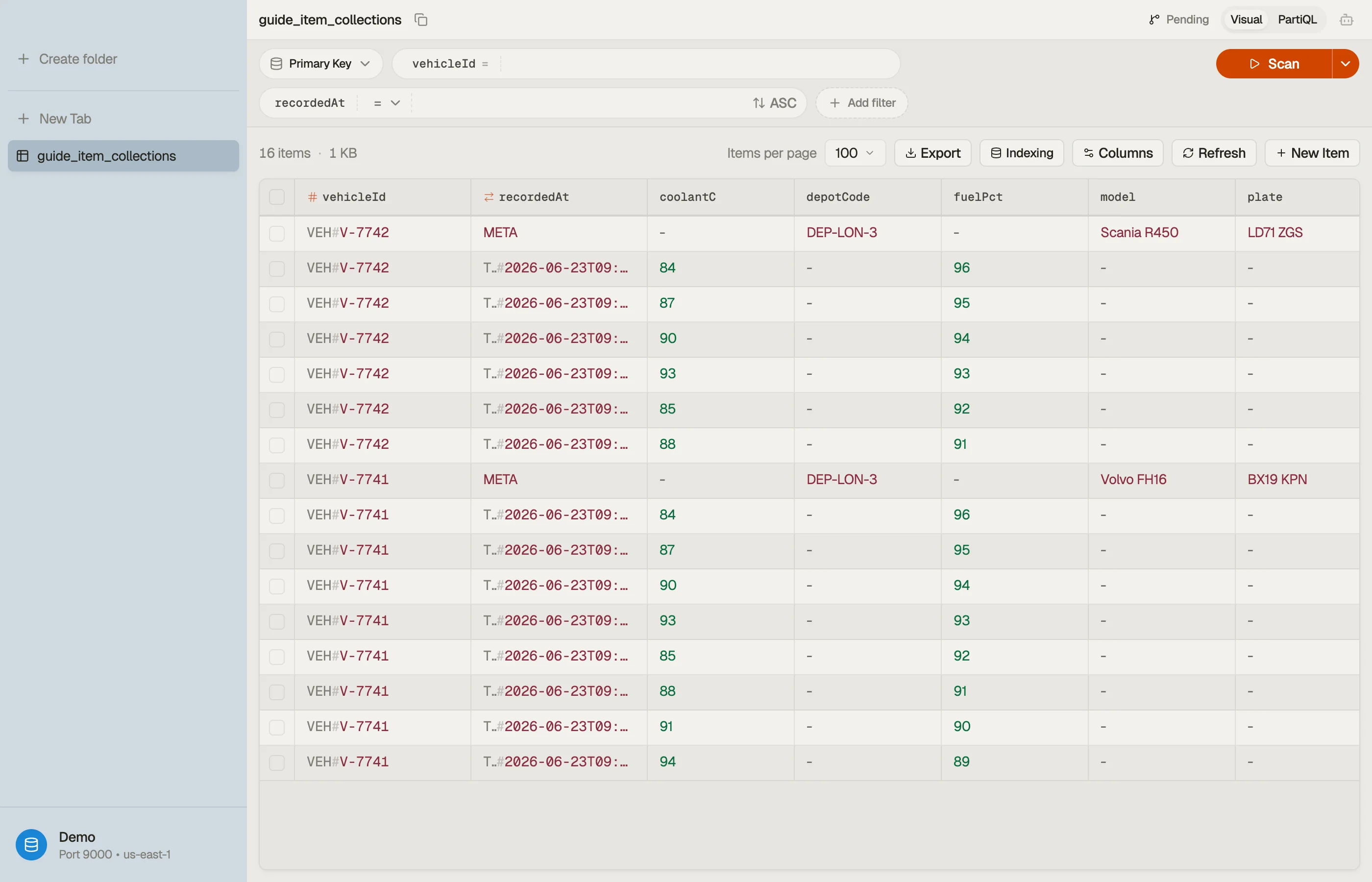
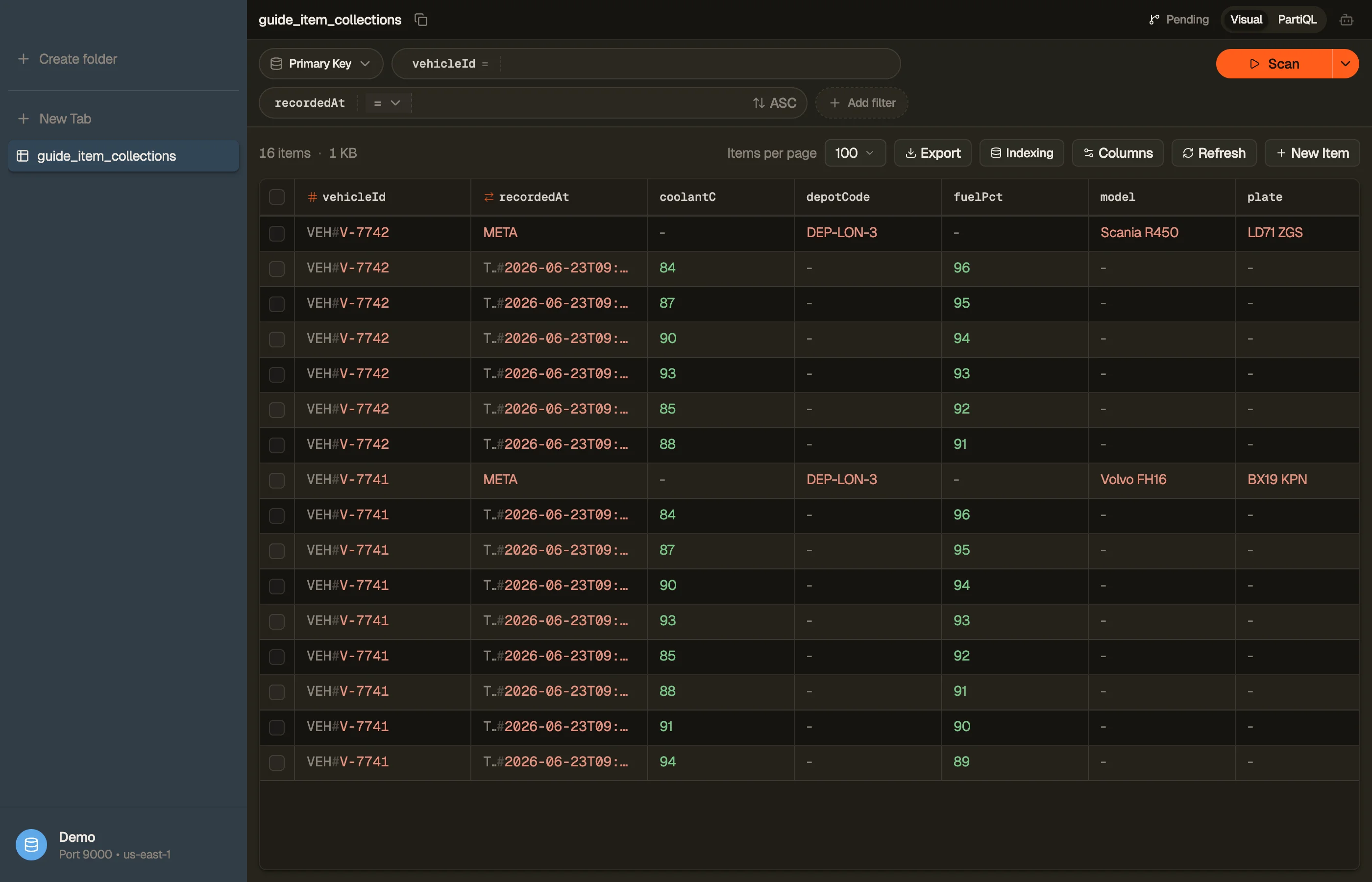
The work shifts to modelling. DynamoDB rewards designing the table around your queries — see how to model data in DynamoDB and single-table design — and explicitly when not to reach for single-table.


Pitfalls + next steps
- Don't model DynamoDB like a relational database — normalised tables you join at read time is the anti-pattern it punishes hardest.
- Don't pick it for analytics — pair it with an analytics store (or export to one) for reporting instead of scanning.
- Unsure about access patterns? Wait. Adopting DynamoDB before you know your queries is choosing the one database that demands you know them.
- Related: query vs scan shows what "key-based access" actually buys you.
Want to explore a DynamoDB table before betting your app on it? Download DynoTable and connect to your data directly.